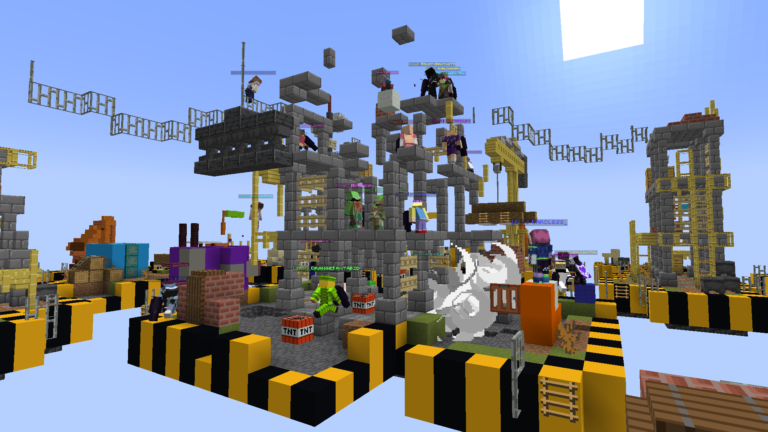
This article lists some of the most common eye conditions, explores the experiences of some of those who experience visual differences, and discusses practical ways in which Minecraft event organisers can make their projects more accessible, allowing those with sight conditions to have a fairer and equally enjoyable experience playing to those without.
COMMON EYE CONDITIONS
Colour vision deficiency – or colour blindness – makes it difficult for a person to be able to identify or tell the difference between various colours. Caused by problems with the light sensitive cone cells in the retina, it is usually a genetic problem, but it can also develop later in life due to conditions or injuries of the eye or brain. While there is no treatment for genetic colour blindness – forcing those with the condition to adapt to living with it – treating the underlying cause may help those who have developed it later.
Myopia – also known by its more common names short-sightedness or near-sightedness – is an eye condition that causes far away objects to appear out of focus. It usually starts in middle childhood (ages 6-12), but can also appear in adulthood due to lifestyle factors, injuries or health conditions, or aging. Meanwhile, hyperopia – a.k.a. long-sightedness or far-sightedness – means close objects appear out of focus. This condition can happen at any age, but usually affects those over the age of 40. Astigmatism is an imperfection in the curve of the cornea or lens that causes blurred or stretched vision, and can happen at any age. Vision in all three of these conditions can usually be corrected with glasses or contact lenses.
Asthenopia – more commonly known as eye strain – causes headaches, vision changes, and eye discomfort. This is caused when the eyes are intensely focused for a prolonged period of time – and one of the most common reasons for this is use of digital screens. Luckily, discomfort is temporary and doesn’t lead to permanent eye damage.
PLAYING MINECRAFT WITH SIGHT ISSUES
“I was first prescribed glasses when I was six years old, after I was found squinting at words and struggling to read,” Minecraft streamer StrangeAidan says. “I now use multifocal lenses that help relax my squint. However, I often find it difficult to accurately aim at very far away targets, my crosshair and their body blending into a mess of pixels. I often have to tilt my head up at an awkward angle and use the bottom part of the lens, which has a stronger magnification, to try to make it easier to see.”
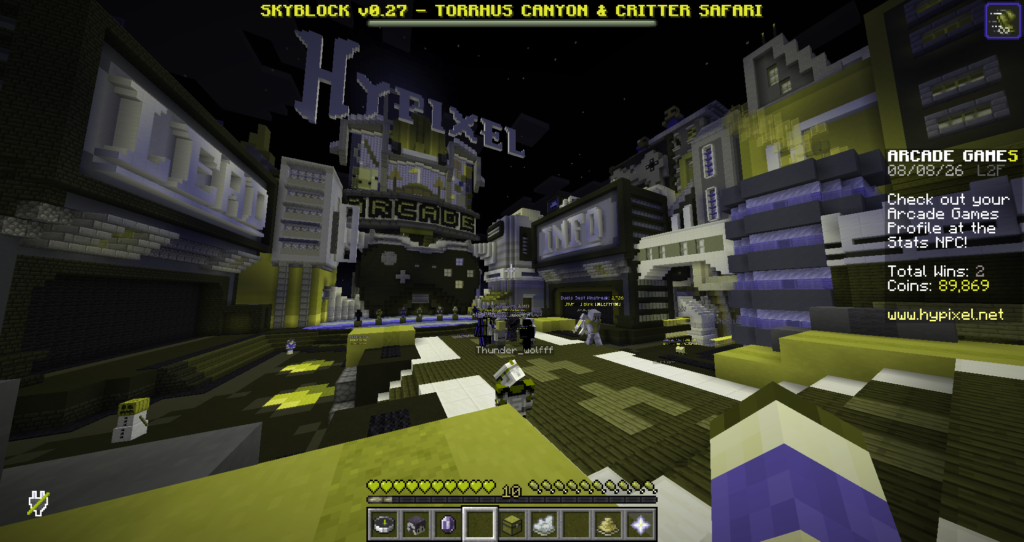
“I first found out I was colour blind when I was around 13 years old,” event player Kosvius tells us. “It’s always affected my life and when I play games. Many games use colour to point out important things, such as enemy outlines. Thankfully, nowadays there has been an effort to add colour blindness options to most games, which has certainly made it a lot easier and a lot fairer – but I do still find myself struggling. This has especially come up for me when I have played in Minecraft events, because sometimes team colours will be called out instead of player names. It can lead to confusion, and in those moments where quick reaction is important, it makes things just that little bit harder.”
“I was diagnosed with Shaken Baby Syndrome when I was three months old, which has caused me to have multiple incurable vision impairments, making me legally blind,” civ and lore event player Riassuring tells us. “The main accessibility tool that I use in Minecraft is the zoom mod. I have seen debates in the Minecraft event community around whether the zoom mod should be allowed in Minecraft events, as it is considered cheating to a lot of people. However, I think the zoom mod is a necessary accommodation that should be allowed in all Minecraft events because it helps visually impaired players be able to see things that players who are not visually impaired can see without the zoom mod.”
MINECRAFT EVENTS & INCREASING ACCESSIBILITY
There are many ways in which Minecraft events can help those with sight problems.
ZOOM MODS: allowing players to use a zoom mod means that if something is too small or far away, they are still able to see it – making it easier to read signs and see details of builds.
BREAKS: having fixed breaks can be beneficial to prevent eyestrain, as it gives players a chance to take time away from their screen.
NO RELIANCE ON COLOUR: if a game specifically requires players to be able to identify colours, you can make it more accessible by also using shapes or textures as alternative visual cues. For example, in MC Championship’s game “Hole In The Wall”, walls approach the player from different directions for them to dodge. Each direction is labelled with a compass direction rather than just a colour, allowing players to give calls without being reliant on saying colour names.
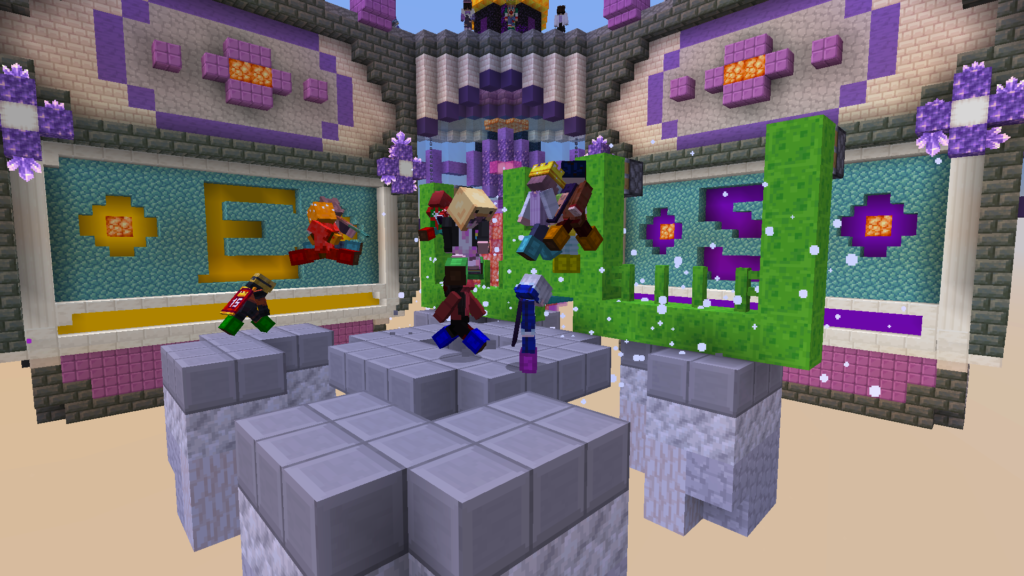
If players need to be able to identify a block just by looking at it, you could also have the name of the block come up on screen, e.g. in the actionbar.
There are also Minecraft mods and plugins that simulate colour blindness – such as “ColorBlindness Client” by cech12, so that you can assess how a game might appear to someone with the condition.
CONTRAST: when building maps, it’s helpful to have a strong contrast between blocks to help prevent eye strain – although taking this too far can have the reverse effect.
By taking accessibility needs into account, event organisers can help ensure that everyone can enjoy the intended story and experience they’ve created.
The Accessibility in Minecraft articles are available as a collection here, with new content added to the top of the page when released.
About The Author